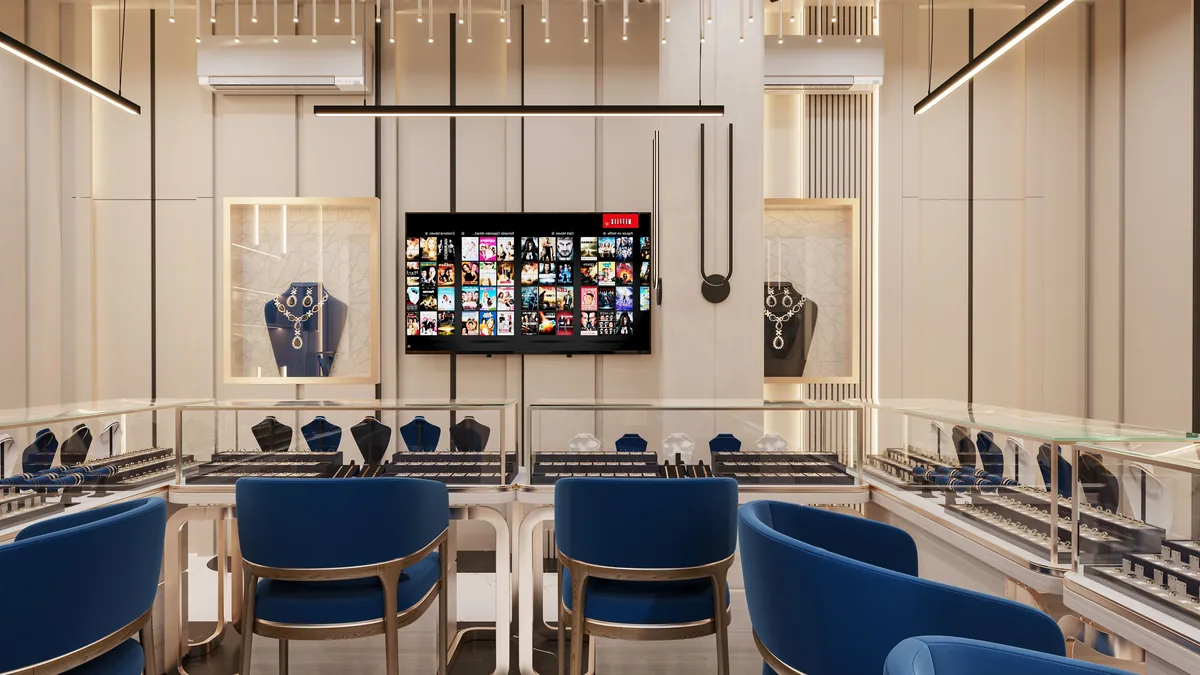
Car dealerships, furniture showrooms, boutiques, breweries, gyms with a retail front, and the growing number of converted industrial spaces around Avondale and Parkside where the building itself is part of the appeal.
In all of these the floor is doing brand work. It also has to survive foot traffic, trolleys, spilled drinks and daily cleaning without looking tired within a year.
The four realistic options
Polished concrete
Mechanically grinding and progressively refining the existing slab through finer diamond grits, with a densifier applied to harden the surface. No coating on top at all.
Advantages: nothing to peel, because nothing is sitting on the surface. Extremely durable. Low ongoing maintenance. And in a converted building it keeps the character of the original slab, which is often the point.
Limitations: you get the concrete you have. Colour variation, old patches, saw cuts and previous repairs all become part of the finish. That is either the charm or the problem, depending on your slab and your taste.
Decorative flake
Durable, textured, forgiving, and considerably cheaper than the alternatives. Reads as functional rather than luxurious, which suits some retail and not others. Excellent where there is heavy trolley traffic.
Quartz broadcast
Coloured quartz aggregate instead of vinyl flake. Harder wearing, more uniform, and reads as a designed floor rather than a coated one. Good slip resistance built in. More expensive than flake, less than metallic.
Metallic
Maximum visual impact. Depth, movement and reflectivity. Right for a showroom where the floor is genuinely a feature and where cleaning happens daily. Wrong anywhere it will be scuffed and not maintained. See metallic epoxy for the full picture including its limitations.
Lighting changes everything
This gets overlooked and it decides the outcome more than product choice does.
A gloss floor under directional spotlights produces hotspots and reflections. Under diffuse lighting the same floor reads as depth. A satin finish is more forgiving of harsh lighting and hides marks better; a full gloss floor under bright retail lighting shows every footprint within an hour of opening.
If the lighting design is not finalised, that is worth resolving before the floor is chosen rather than after.
Slip resistance in a public space
Different obligation from a private garage. A retail floor is used by the public, including people who are elderly, carrying things, or coming in from rain with wet shoes.
The entrance zone matters most. Water gets walked in for the first ten or fifteen feet of any Birmingham shop on a wet day, and a high-gloss surface there is a genuine hazard. Entrance matting helps but does not remove the requirement.
Aggregate can be specified into the topcoat at the entrance and reduced further in, which is a sensible compromise between safety and appearance.
Working around trading hours
Retail work is almost always out of hours. Overnight, or across a closure period, sometimes in zones with hoarding.
Polyaspartic and fast-cure systems exist in this conversation because a floor that is walkable in hours rather than days is what makes an overnight turnaround possible at all.
Odour matters more here than in a warehouse. A retail unit that opens smelling of solvent has a problem, and low-odour systems are worth the difference.
Dust containment matters if you are trading adjacent to the work, particularly with stock on shelves.
Existing floor coverings
Most retail refits start with removal. Vinyl tile, carpet with adhesive residue, ceramic tile on a thick bed, or several of these in layers from successive tenants.
Adhesive removal is the one that catches people out. Old black cutback adhesive needs care and adds time. It is also frequently discovered rather than expected, so it is worth investigating before the programme is fixed rather than during.
Where the slab has been under tile for decades it is often in excellent condition underneath, which is good news for polished concrete.
Converted industrial space, which Birmingham has a lot of
Worth its own section because it is a large share of this work here. The old commercial and light industrial stock around Avondale, Parkside, Lakeview and the Southside has been steadily converted into breweries, restaurants, showrooms and studios, and the slab is usually part of why the tenant chose the building.
Those floors bring specific conditions. They are often decades old, frequently with several generations of coating, adhesive and paint on them. They have saw cuts, patches from removed machinery, bolt holes, and colour differences where equipment stood for thirty years.
The decision is whether that history is the feature or the problem. If it is the feature, polished concrete reveals it and the marks become part of the room. If it is the problem, a coating covers it and you get uniformity instead.
What you cannot do is take the middle road and hope. A polished floor in a building like this will show everything, and finding that out after the grinder has been through is an expensive way to change your mind. We grind a test area first on any converted space, in a spot you can actually look at under your own lighting.
The other thing these buildings bring is moisture. A slab poured in 1955 for a machine shop almost certainly has no vapour barrier under it. If the plan involves a coating rather than a polish, that gets tested.
What we need to know
The look you are after, ideally with reference images. Your lighting design. Trading hours and how much of the space can be released. What is currently on the floor. Whether the slab has ever been assessed for moisture. And whether the space is a long-term lease, because that changes how much it is worth spending.
For a workshop attached to a showroom, see auto shop floor coating. For back-of-house storage, warehouse floor coating.
Common questions
Polished concrete or a coating?
Polished if your slab is sound and you want its character, with nothing on the surface to fail. Coated if you need a specific colour or the slab is too damaged to reveal.
How much disruption to trading?
Usually none, because the work happens out of hours in phases. Fast-cure systems are what make an overnight turnaround feasible.
Will it show scratches?
Gloss shows more than satin, and smooth shows more than textured. In a busy retail space a satin finish generally ages better and looks better six months in.
What about the entrance on a rainy day?
Specify more grip in the first stretch and reduce it further in. Matting helps but does not replace the specification.
We have old tile down. Is that a problem?
It comes up, along with the bed or adhesive. Old black cutback adhesive in particular needs care and adds time, and it is best identified before the programme is set.
How long will it last?
Polished concrete effectively indefinitely with periodic maintenance. A coated floor depends on traffic, but the topcoat can be refreshed without redoing the system.
Get a free quote
Tell us the space and roughly how big it is. We'll come measure it, and you get the scope and the price in writing.